Beeswax vs. paraffin: what's actually in your candle
Flip a candle over and read the wax. Here's what beeswax, paraffin, and soy actually are — and why we only stock one of them.
Pick up a candle in most stores and turn it over. The label will tell you the scent — "Cashmere Woods," "Volcano," something evocative — and almost nothing about the wax. But the wax is the candle. Everything else is decoration.
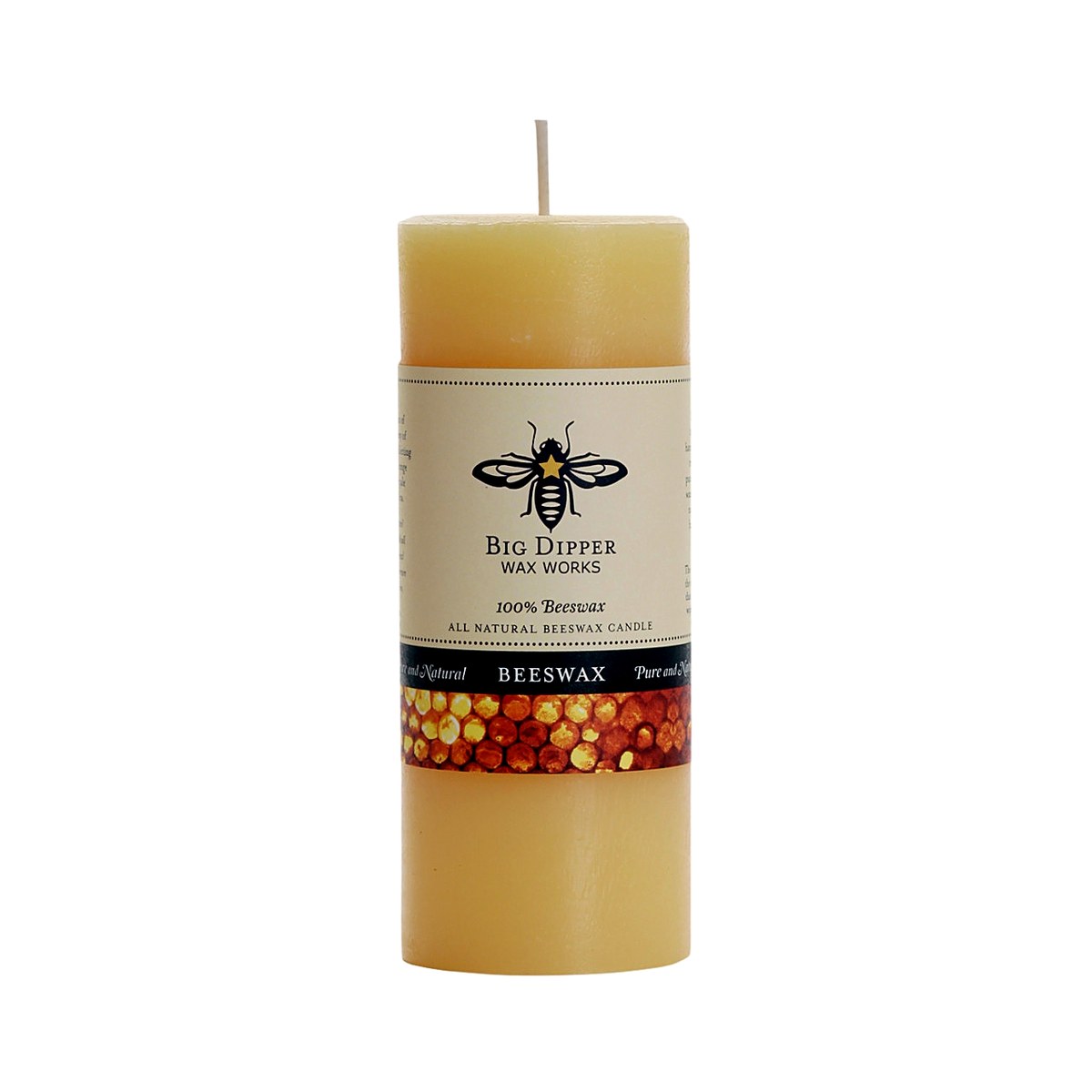
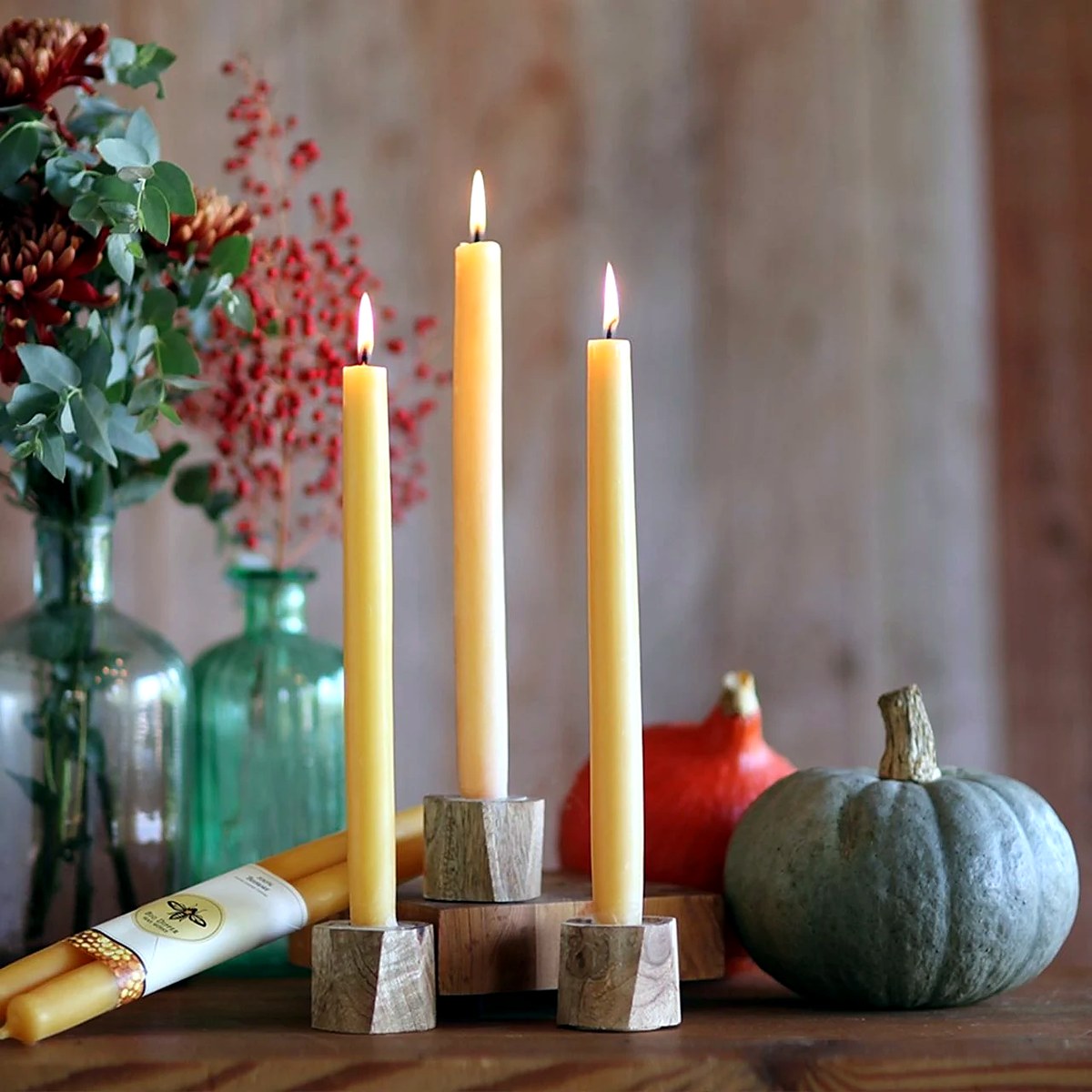
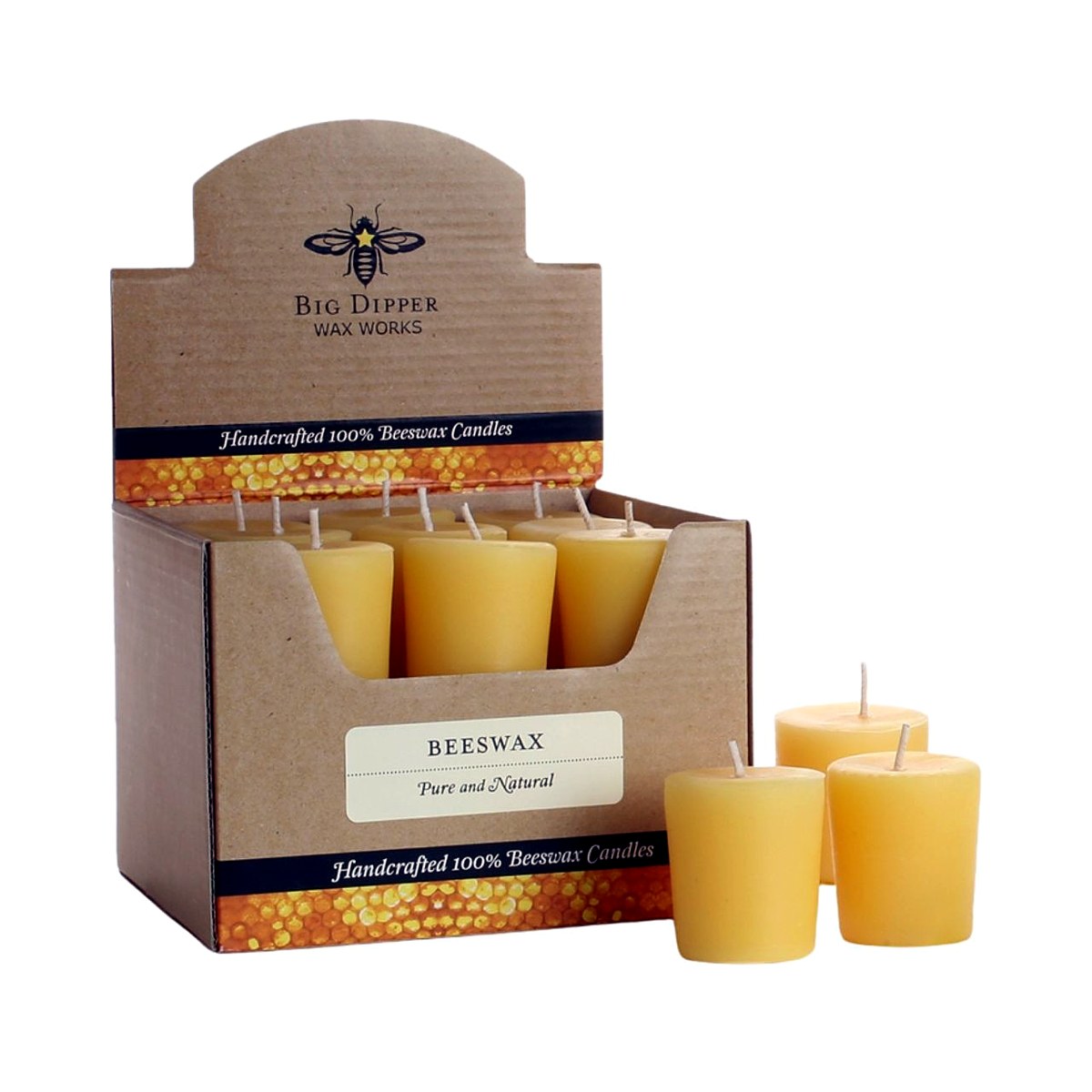
Beeswax: simply beeswax. It's the wax honeybees produce to build their comb, filtered and poured. That's the whole ingredient list. It has a faint natural honey scent, burns with a warm golden flame, and burns slowly — a beeswax pillar gives you far more hours than the same size in other waxes. When we say a candle is 100% pure beeswax, we mean you could read the ingredient list in two seconds.
Paraffin: a petroleum product. Most candles on the market are paraffin — a wax refined from petroleum. It's cheap, holds scent well, and that's why it's everywhere. But it's worth knowing what you're burning: refined crude oil, usually with synthetic fragrance added. Some people notice soot or headaches around paraffin candles; others don't. We're not here to scare you — we're here to tell you that when a label just says "wax" or says nothing at all, paraffin is usually what's in the jar.
Soy: better, with questions. Soy wax comes from soybeans, which sounds lovely — but most soy candles are blends, and the label rarely says blended with what. "Soy blend" can mean mostly paraffin. If you buy soy, look for 100% soy with a full disclosure, the same as anything else.
"Clean-burning" means nothing. It's not a regulated term. Anyone can put it on a label. What matters is what's actually in the wax and whether the maker will say so plainly. Our rule is the same as everywhere else in the store: full disclosure or it doesn't list.
How to burn any candle well. Trim the wick to about a quarter inch before every lighting — this is the single biggest factor in a clean, steady flame. Let the wax melt all the way to the edge on the first burn so it doesn't tunnel. Keep candles away from drafts, curtains, and curious pets. Never leave one burning unattended, and put it out before you leave the room or fall asleep. A candle is a small, lovely open flame — treat it like one.
What about scented beeswax? Pure beeswax has its own gentle honey aroma. Some makers add essential oils — that's fine by our standard, as long as the oils are disclosed and real. What we won't stock is beeswax blended with paraffin or scented with undisclosed "fragrance." If the label can't say what's in it, we can't sell it.
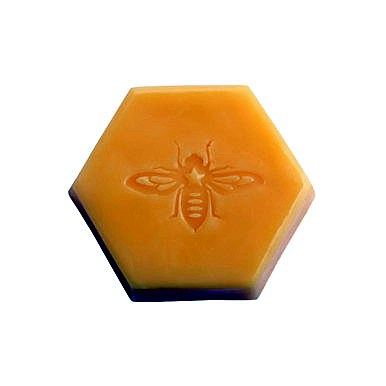
The DIY angle. If you like the idea of pouring your own, a block of pure beeswax plus wicks is the whole starter kit. Melt it gently (never leave melting wax unattended — wax fires are real and water makes them worse), pour into a heat-safe container with a centered wick, and let it set. There's something deeply satisfying about lighting a candle you made yourself.
Don't forget the wick. The wax gets all the attention, but the wick matters too. Look for cotton or wood wicks — lead-core wicks were banned in the US years ago, but cheap imports still turn up with questionable metal cores, so buy from makers who say what the wick is. A good wick is centered, the right thickness for the container, and trimmed short. If a candle smokes heavily no matter how you trim it, the wick is wrong for the wax, and no amount of trimming fixes a badly made candle.
The takeaway is simple: a candle should be wax you can name, from a maker who'll say so. Everything else is just atmosphere — and the atmosphere is the point.