Your first ferment: sauerkraut without fear
Cabbage, salt, a jar, and a little patience. Fermentation is humanity's oldest kitchen skill — here's how to start.
People have been fermenting cabbage for roughly two thousand years, in crocks, in cellars, without thermometers or pH strips. You — with a jar, some salt, and a kitchen — are extremely well equipped. Sauerkraut is the perfect first ferment: two ingredients, no special cultures, and very forgiving.
What fermentation actually is. The short version: salt draws water out of the cabbage, making a brine. Naturally occurring lactic acid bacteria — already living on the cabbage leaves — thrive in that salty environment and convert sugars into lactic acid. That acid is what gives sauerkraut its tang and what keeps the environment inhospitable to spoilage organisms. You're not adding magic; you're setting the table for microbes that were already invited.
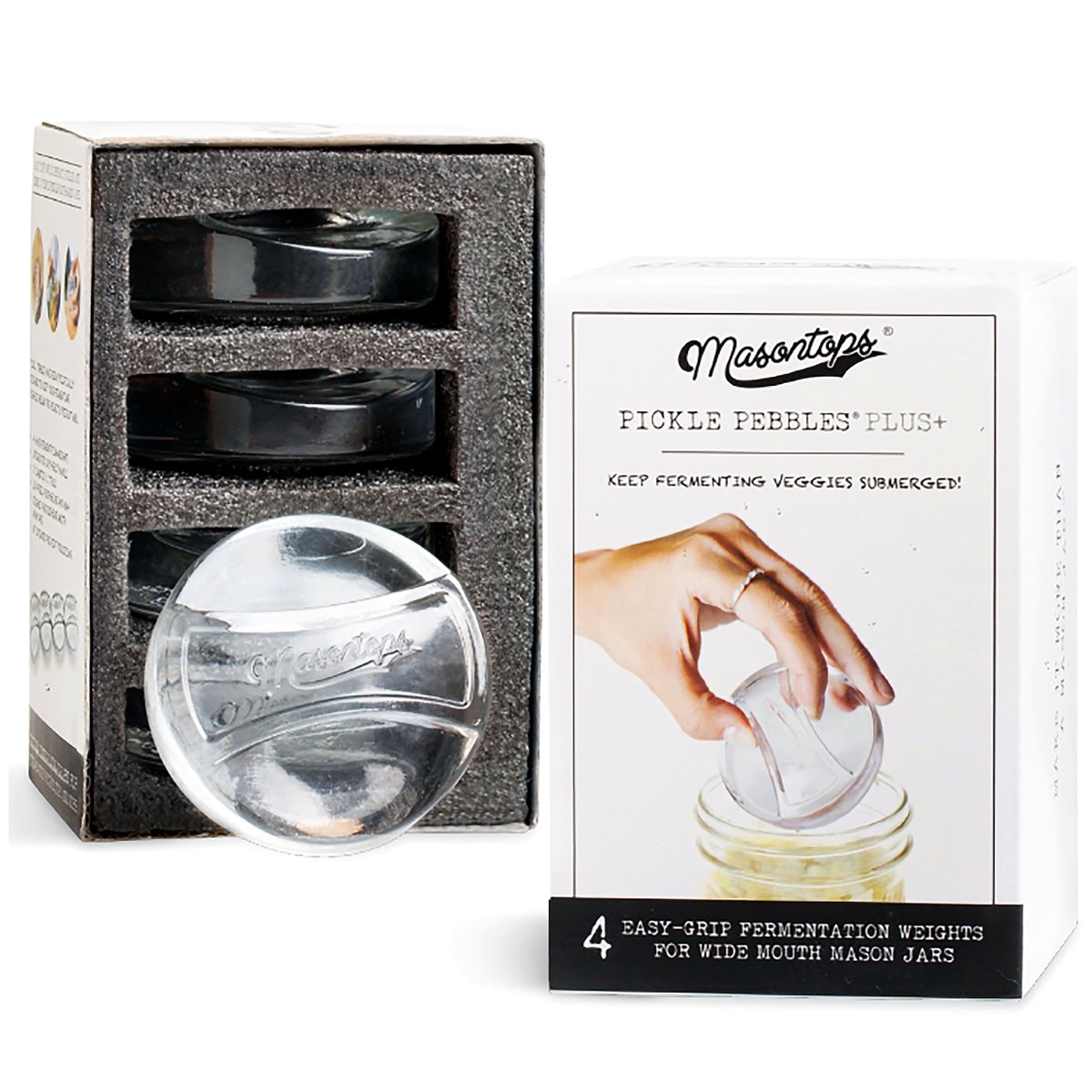
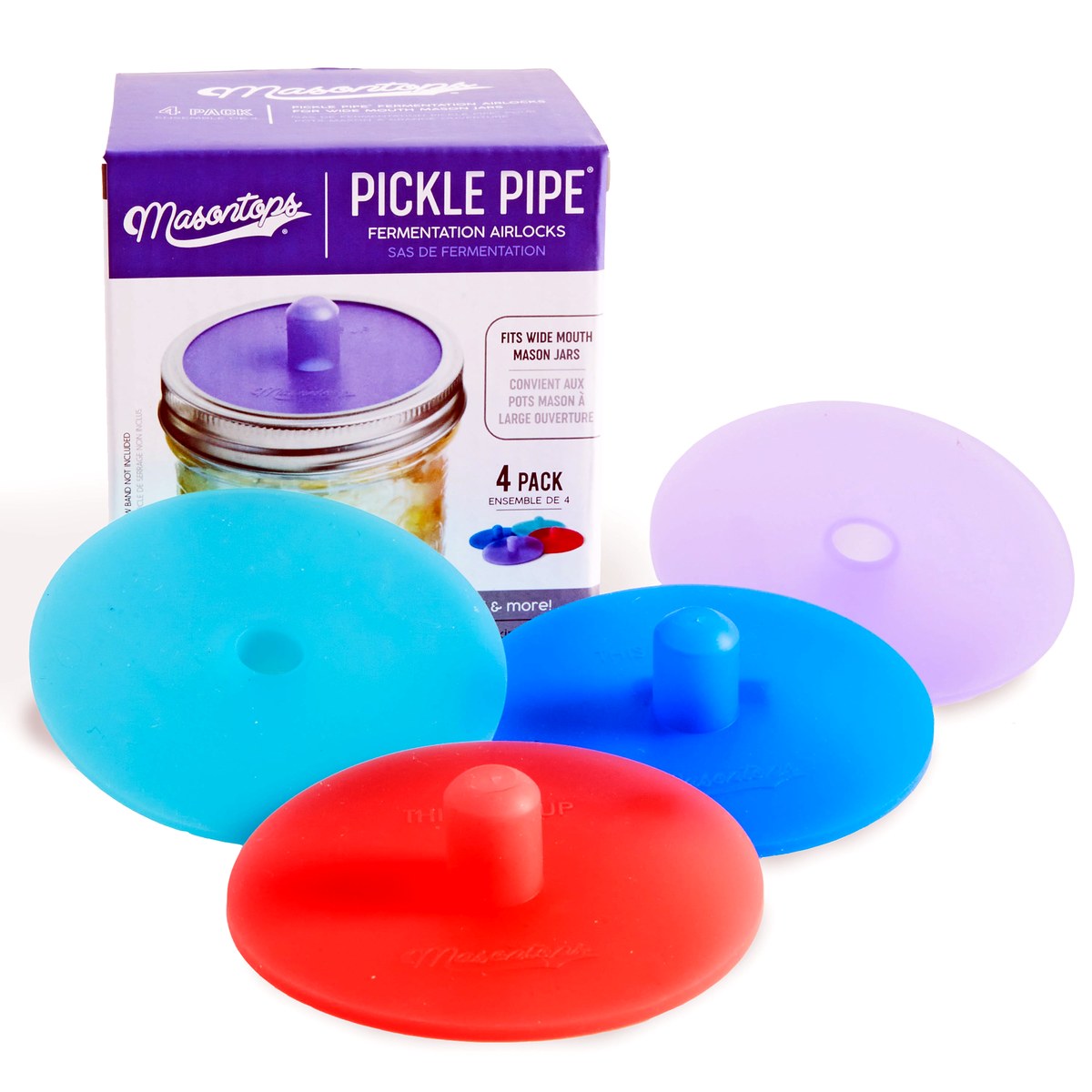
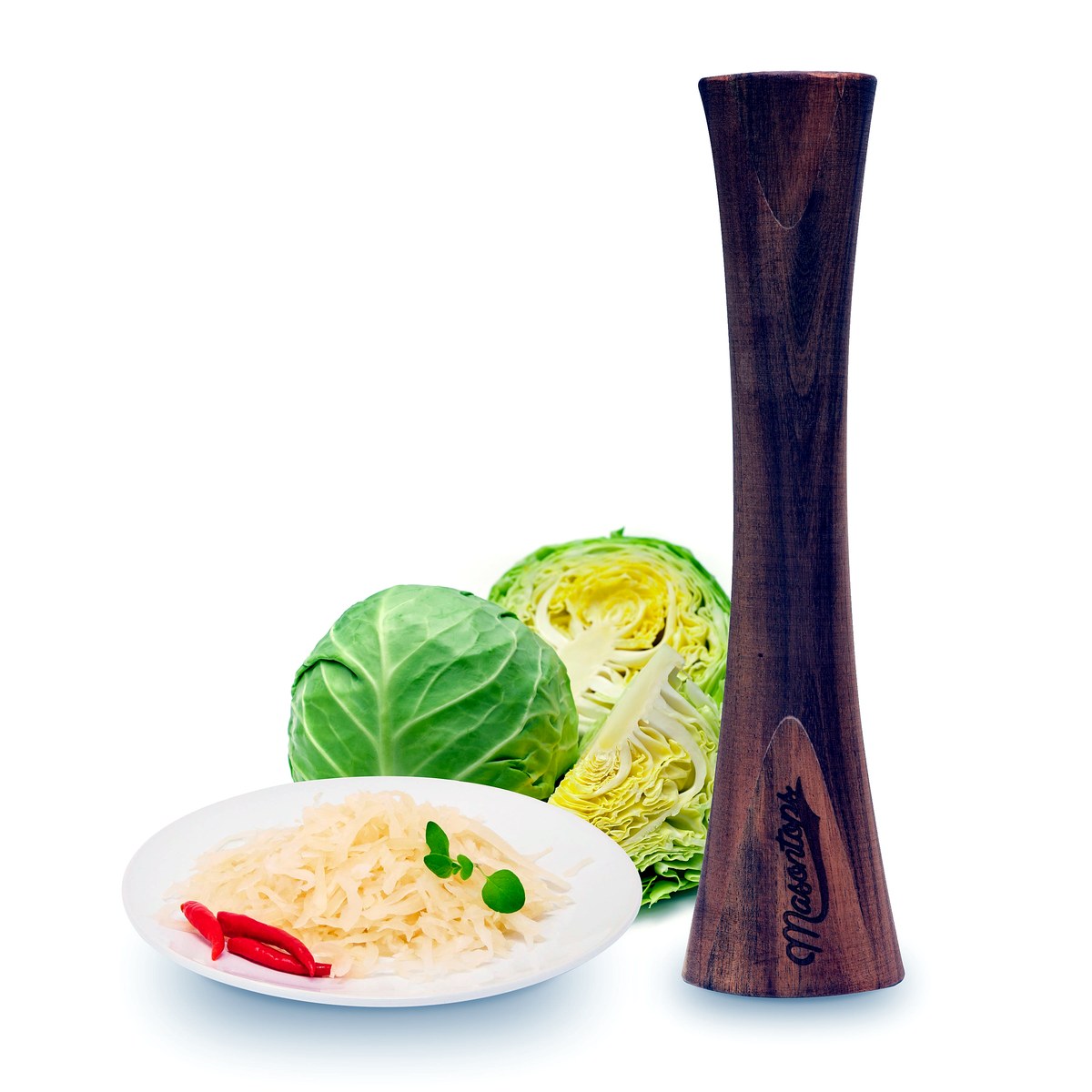
What you need. A head of green cabbage, non-iodized salt (about 2% of the cabbage's weight — roughly a tablespoon per quart jar of packed cabbage), a clean wide-mouth jar, and something to keep the cabbage submerged. That's the whole list. A fermentation kit with airlocks and glass weights makes it nearly foolproof, and a wooden tamper saves your knuckles — but people managed with plates and clean stones for centuries.
The method. Remove the outer leaves (save one clean one). Quarter, core, and shred the cabbage thin. Toss it with the salt in a big bowl and massage — really work it — for five to ten minutes until it releases a good amount of liquid and feels limp. Pack it tightly into the jar a handful at a time, pressing down so the brine rises above the cabbage. This part matters: everything needs to stay under the brine. Lay the reserved leaf over the top, add a weight, and fit an airlock lid (or a loose regular lid you'll burp daily). Set it somewhere room temperature, out of direct sun.
The wait. In three days or so you'll see bubbles — that's fermentation happening. Taste it at a week. At two weeks it's properly tangy for most people; some go three or four for deeper flavor. When you like it, put a lid on and move it to the fridge, where it keeps for months and the flavor keeps slowly developing.
Troubleshooting without panic. White film or kahm yeast on the surface? Skim it; the kraut underneath is fine. Cabbage poking above the brine turning brown? Push it under or trim it. Mushy texture usually means too warm or too little salt — still safe, just softer. The real rule: mold that's fuzzy and colorful (blue, green, black, pink) means something went wrong — compost that batch and start over. And the golden rule of fermentation: when in doubt, throw it out. Your nose knows; off smells mean off batch. A healthy ferment smells pleasantly sour, like a deli.
A few honest notes. Use clean hands, clean jars, clean tools — standard kitchen hygiene does most of the safety work. Keep everything submerged; exposure to air is where problems start. This is a traditional food recipe, not medicine — it's dinner, and delicious dinner at that.
Why start here. Sauerkraut teaches you the core skill behind all vegetable fermentation: salt, submersion, patience. Once you've made one jar, kimchi, pickled carrots, and brined cucumbers are all variations on the same theme. Two thousand years of cooks are nodding at you. Welcome to the club.
What to ferment next. Once sauerkraut feels easy, the same salt-and-submersion method opens a whole shelf: dilly carrots and green beans (add garlic and dill to the brine), kimchi-style napa cabbage with chili flakes, or classic cucumber pickles with grape leaves for crunch. A set of glass weights and airlock lids turns every jar into a set-and-forget project. Same rules every time — clean tools, everything under the brine, when in doubt throw it out — and suddenly you're the person who always has something interesting in the fridge.